Moving on from WHCD
Serious disagreements don't have to come at the expense of understanding
The White House Correspondents’ Dinner is supposed to be a celebration - of the First Amendment, of a free press, of the uneasy but essential relationship between power and those who cover it. Saturday night, it became something else entirely. And the way everyone responded to that - journalists, yes, but also the public watching in real time - reveals something worth examining about the moment we’re all in together.
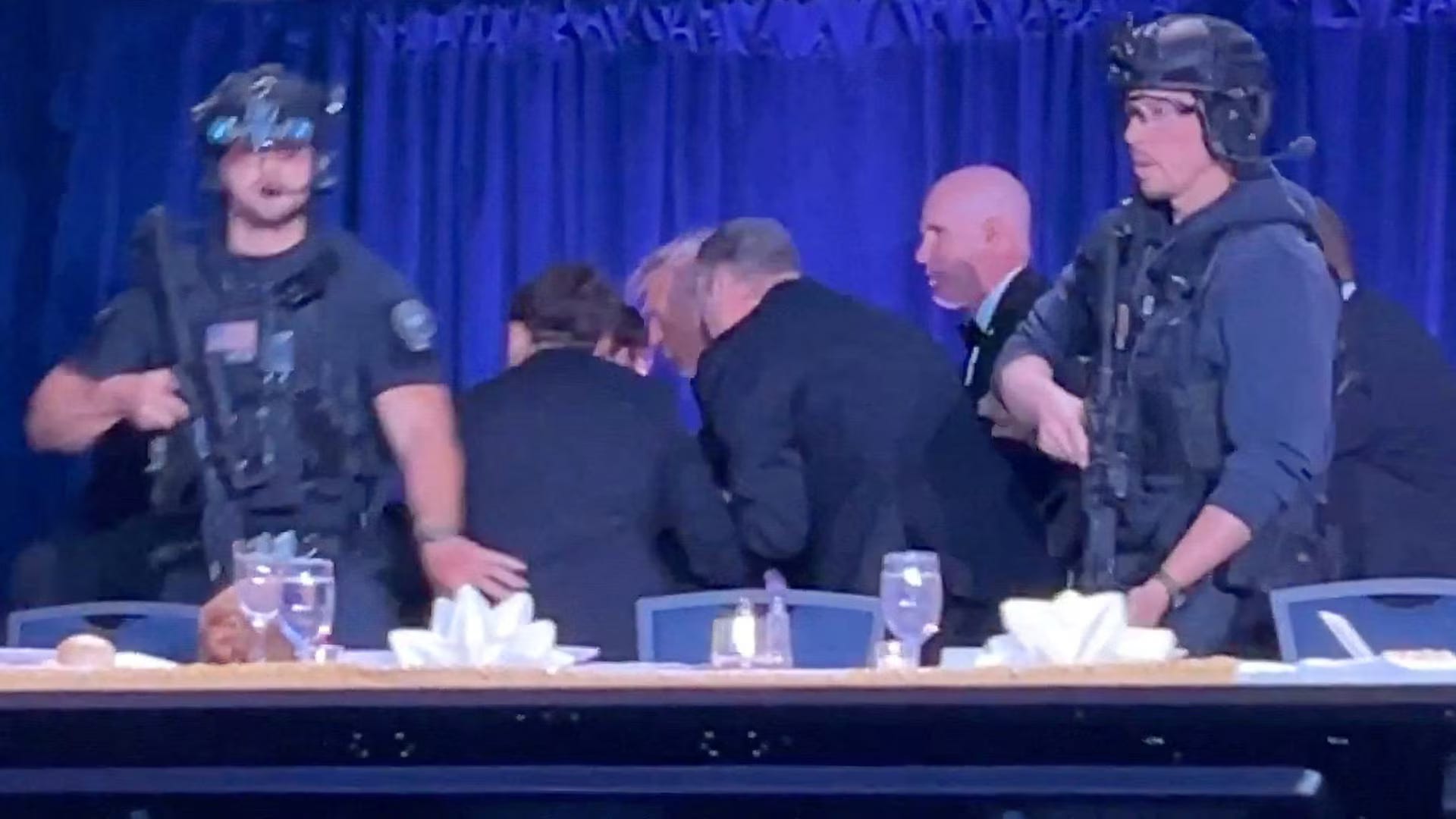
More than 2,500 journalists, politicians, and public figures were inside the Hilton ballroom when word spread that a gunman had breached the security perimeter. For several moments, no one knew exactly how close the danger was.
My first thought was for the many friends and colleagues I knew were in that room. Several told me later they had never been so scared - that in those seconds, their minds went immediately to their families, to whether they would make it home. President Trump was evacuated along with senior officials. A Secret Service agent was injured. The knowledge of how much worse it could have been is part of what lingers. And above all, there is relief that it wasn’t.
And in the middle of all of it, journalists pulled out their phones and started filming.
I was a few blocks away at the Substack gathering at the Renwick Gallery, effectively locked down because of our proximity to the White House and the president’s movement back to the residence. Conversations stalled. People reached for their phones. And then - reflexively, almost involuntarily - the journalists in that room did the same thing the journalists inside the Hilton were doing. They started reporting. Comparing notes, texting sources, refreshing feeds, trying to understand what was unfolding in real time.
Different rooms, different levels of danger. Same reflex to move quickly and get it right. That discipline, applied to a genuine crisis, is exactly what a free press is for.
But even as the facts were coming in, the cycle had already restarted - the instant analysis, the partisan framing, the reflexive blame on all sides. Even in spaces like Substack, meant for more thoughtful discussion, the pull toward outrage proved stronger than the call for reflection.
Every time there is an act of political violence in this country, we go through the same cycle. The shock is real. The fear is real. The calls for unity are sincere, at least in the moment. After Saturday night, President Trump struck the familiar tone: “We have to resolve our differences,” he said, noting that in that room were “Republicans, Democrats, independents, conservatives, liberals and progressives.” It is exactly the right message - and it is one we have heard before — after Butler, after the murder of Charlie Kirk and other moments that felt like they might finally force a reckoning.
This violence is reflective of the environment surrounding it. Politics in this country no longer feels like a contest of ideas. It feels like identity. It feels existential. And when that happens, disagreement hardens into something more dangerous - something that leaves little room for restraint.
This isn’t random. It is the product of a system where shared facts are eroding, where every event is instantly weaponized, and where anger has become a kind of currency. In that environment, the distance between rhetoric and action starts to shrink. We begin to lose the ability - or the willingness - to see one another as anything other than opponents to be defeated.
And increasingly, that dynamic is seeping into the media itself. Not all journalists, but enough that it’s noticeable: righteous indignation hardening into snark and cynicism, mistaken for rigor, clarity, or accountability. And the audience, already primed for outrage and looking for confirmation of what it already believes, rewards the performance over the reporting.
There is a difference between holding power to account and feeding the very cycle that is corroding the public square. It is still possible to do the former with discipline, context, and nuance - without inflaming the latter.
If you’ve been reading me for a while, you know I don’t pull punches. I’m not shy about calling out policies or people I take issue with. But I always try - however imperfectly - to do it with a measure of respect, and with the awareness that serious disagreements don’t have to come at the expense of basic understanding. Lately, that can feel like a lonely place to stand.
I had planned to write today about the strange choreography of this weekend - the WHCD itself, and what it reveals about the relationship between this press corps and this president. That piece can wait. What can’t wait is the harder question: not whether we move on from Saturday night, but how?
Moving on cannot mean returning to instinct - to the easy, performative outrage that fills our feeds and reinforces our divisions. If anything is going to change, it has to be more deliberate than that. It requires a conscious effort to step outside the reflex, to resist the pull of immediate judgment, and to engage with a level of empathy that feels increasingly unnatural in this environment - even, and especially, toward those we disagree with most.
That’s not a soft standard. It’s actually a harder one than outrage. And it falls on all of us - not just the people with bylines.
If we don’t choose differently, we already know what comes next.
Three decades covering foreign policy has taught me one thing: the story is almost never as simple as your side wants it to be. That’s why I call balls and strikes without keeping score.
That means you get reporting and analysis that makes partisans on both sides a little uncomfortable. Clear-eyed, fact-based, and beholden to no one.
If that’s the kind of coverage you want to read- I hope you will subscribe.


https://cashflowcollective.substack.com/p/the-guest-at-the-hilton?r=4yoyh3&utm_medium=ios
So well written as always and expresses exactly how so many of us feel in these times.