


Three decades covering foreign policy has taught me one thing: the story is almost never as simple as your side wants it to be. That’s why I call balls and strikes without keeping score.
That means you get reporting and analysis that makes partisans on both sides a little uncomfortable. Clear-eyed, fact based, and beholden to no one.
If that’s the kind of coverage you want to read- I hope you will support my work by subscribing or making a contribution
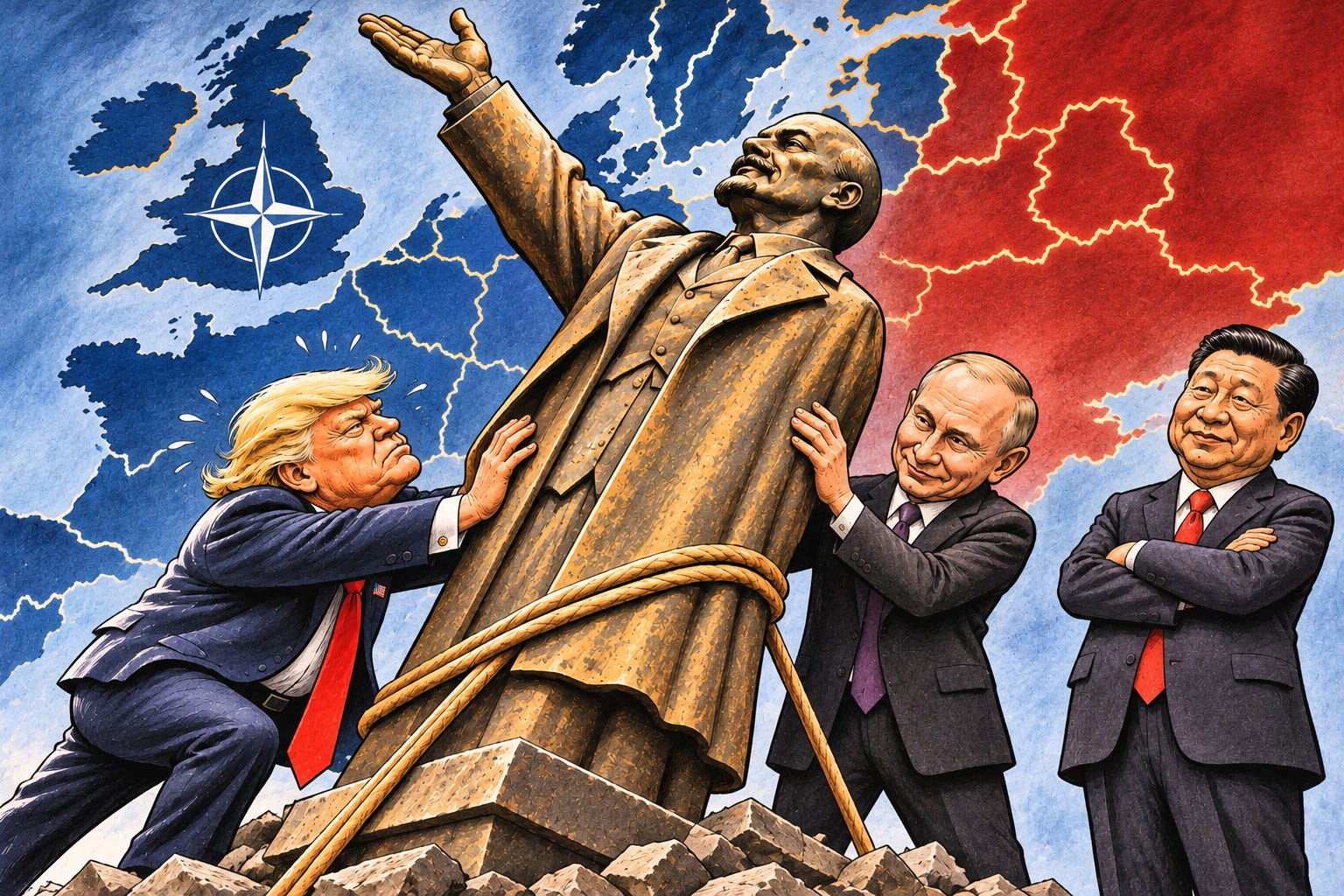
Donald Trump, Vladimir Putin and Xi Jinping are expected to meet this week in Shenzhen, China, at a summit the Kremlin hopes will settle the war in Ukraine on its terms. On that score, Shenzhen is likely to be a sideshow. The meeting that matters more for Europe’s future took place last week, in Abu Dhabi.
There, at the first U.S.-brokered talks between Russia and Ukraine since February, Trump’s envoys, Jared Kushner and Steve Witkoff, invited Moscow to lay out its demands for a new European security architecture, along with reciprocal steps to reassure Europe. Kushner has written that Europe and Russia have struggled for more than 30 years to build a sustainable security framework. That framing treats the post-Cold War order as the problem.
Trump is offering Putin a conversation about Europe’s security as a way to end the war in Ukraine. Putin started the war to force that conversation.
The document Russian negotiators presented, first reported by the New York Times repeats in places word for word the demands Moscow issued in December 2021, two months before it invaded. At the time, NATO dismissed those demands as nonstarters. This time, Washington asked Moscow to put them back on the table.
Under the new document, NATO would pull its forces back to their 1997 positions, before Poland and the Baltic states joined. The alliance would rule out further enlargement and any military activity in Eastern Europe, the South Caucasus or Central Asia, and Western weapons deliveries to Ukraine would end.
Moscow has added a new demand that Britain and France not extend their nuclear deterrents to other European countries. Europeans began weighing that option only recently, because they doubt Trump would defend them.
Russian negotiators reportedly held up the Cold War division of Europe into American and Soviet spheres as a model for stability. Their chief, Vladimir Medinsky, called Ukraine an abscess that had burst on a sick organism. A bandage won’t do, he said; the whole body must be treated. The disease, in Moscow’s telling, is Europe’s security order itself.
Administration officials insist that Europe and Ukraine must approve any arrangement and that Russia will get no veto over NATO. Those assurances are welcome. But once you ask the aggressor what would make him feel secure, you have accepted his diagnosis.
The talks are already testing that premise. According to Ukrainian President Volodymyr Zelensky, U.S. negotiators asked, for the first time, whether Ukraine would withdraw from the parts of Donbas that Russia has failed to capture in exchange for NATO membership. The alliance’s other members have never agreed to offer it.
So Washington is dangling NATO membership in front of Kyiv while inviting Moscow to explain how far NATO should retreat. Both treat the alliance as a bargaining chip rather than a commitment. Lowering tensions with Moscow is a worthy goal. But Putin’s premise is that NATO enlargement, not Russian aggression, destabilized Europe. Treat that as a starting point, and his invasion becomes a grievance Europe must accommodate, rather than a violation of international law Russia must answer for.”
NATO expanded because countries once dominated by Moscow wanted protection against a return of Russian power. In the 1997 NATO-Russia Founding Act, signed the same year Moscow now wants NATO to retreat to, Russia itself pledged to respect every state’s freedom to choose its own security arrangements. Now Moscow is calling for a “new” security architecture, the one Eastern Europeans spent the Cold War trying to escape.
In Washington, it is getting a hearing. The administration has already eased sanctions and let Russian diesel flow. Defense Secretary Pete Hegseth has called NATO a “paper tiger” and ordered a review of U.S. force posture in Europe, all in the name of burden-sharing. Against that backdrop, meeting Moscow halfway on European security would look less like a concession than a continuation.
Burden-sharing is a legitimate debate, and European allies have raised defense spending substantially. But America’s military presence in Europe isn’t a favor to Europeans. It gives Washington a network of allies that neither Russia nor China can match. That network is the dividend of the Cold War, secured without a direct war with Moscow.
Putin, who called the Soviet collapse the greatest geopolitical catastrophe of the 20th century, wants to reverse it. Medinsky has said Moscow’s goal is a European security system that would become “a new modern Yalta or Potsdam,” and many are casting this week’s Shenzhen meeting in those terms.
That seems unlikely. The White House says Trump wants the meeting to address arms control, and Xi has shown little interest in owning a Ukraine settlement, insisting that Europeans must sit at the table. It is a strange moment when the Chinese leader is the one making that case.
But Putin doesn’t need a summit to get what he wants. All he needs is for Washington to start treating the security choices of smaller nations as matters to be settled among larger powers. Beijing would read that as proof that American commitments are negotiable. Tokyo and Taipei would fear their own security could be up for grabs next.
Trump wants to be remembered as the president who ended the war in Ukraine. He risks being remembered instead as the one who helped Putin undo the end of the Cold War. A settlement that hands Moscow a larger sphere of influence won’t prevent the next war; it will invite it.
Help shape the future of Cosmopolitics …take our survey!